- Supercool
- Posts
- 🌐 320 Boreholes Below Brooklyn: How Geothermal Replaces Fossil Fuels in Cities
🌐 320 Boreholes Below Brooklyn: How Geothermal Replaces Fossil Fuels in Cities

Josh Dorfman
March 05, 2026
In 2005, I moved to Greenpoint in Brooklyn. It was a traditional Polish neighborhood on the northern edge of hipster Williamsburg.
My apartment eventually became the furniture showroom for Vivavi, my first sustainable venture. Below it was a restaurant specializing in goulash, and the aroma was ever-present for the intrepid interior designers who came from Manhattan to see our contemporary, sustainable furnishings.
Greenpoint was full of low-slung buildings running for over a mile from my apartment to the edge of the East River, looking out towards Manhattan.
Back then, the closest thing we had to geothermal was steaming manholes.
Last month, that changed. The Riverie—the largest geothermal residential building in New York City, with 834 apartments—opened, heated and cooled by the ground below it. Even the rooftop pool runs on geothermal.

The Riverie in Brooklyn.
When I read that it was made possible by hundreds of boreholes drilled hundreds of feet underground, I had a couple of questions:
Who actually does that work?
How do you do it in a dense city, where a city's worth of infrastructure is down below: water, gas, electric, telecom, subways, foundations?
Those questions led me to Geosource Energy, and to Stan Reitsma, CEO, a geological engineer who has spent two decades leading the company as it has grown up (and down) with the industry — and who's helped turn geoexchange from a simple idea into a decarbonization pathway for cities.
Geoexchange is straightforward to explain but hard to execute: you drill vertical boreholes hundreds of feet down, and utilize heat pumps to move heat into and out of the ground, depending on the season, to provide heating in the winter and cooling in the summer. It's fully electric and eliminates the need for on-site fossil-fuel combustion.

CNBC covered how the geoexchange system works at the Riverie.
But in a dense city, geothermal providers don't have the latitude provided by an open field, like a football field adjacent to a high school, for instance. You're drilling on a construction site—often right where a building is about to go up—on a schedule where a delay can cost more than the geo system itself.
Stan told me about an early urban drilling job so brutal—drilling from inside an active excavation—that he swore he'd never do it again.
Then he spent the next 15 years solving the problem: drilling from grade so they can get in early and get out of the way, then capping and protecting the loops so the system can survive years of construction above it—and be ready the day the building comes online.
Geosource also developed specialized angle drilling—enabling them to build a large underground borefield from a single small drill pad: 850 feet down, 350 feet out, at a 25-degree angle. That's how you convince developers and city officials that this can be done without major disruption.
Geosource has completed more than 400 projects. Stan calls it "500-year pipe"—meaning the underground loops can last for centuries. He's seen a building come down and the borefield stay put, ready for the next building.
Building owners choose geoexchange for the operating savings. And for every dollar saved at the building level, the grid saves eight or nine—because geoexchange cuts peak demand when electricity is most expensive and most scarce.
That's a true decarbonization driver, and why cities from Toronto to Boston to New York City are leaning in, with more to follow.
Here’s what stood out most from my conversation with Stan: Five lines on the clean energy shift beneath our cities.
The building economics work. The grid savings bring cities in.
“The neighbor sees it and the next neighbor. Those are the things that are gonna start driving the math on this.”
Once it works nearby, the conversation shifts from technology to economics. Quebec is already putting serious money behind residential geo because reducing peak demand pays back at the grid level. Toronto, Boston, and New York are leaning in for the same reason: avoiding the peak is cheaper than building for it.
The worst drill job became the playbook.
“And I swore that I would never do that again. So this is where we came up with the next solution.”
Urban geoexchange didn’t scale because heat pumps became smarter. It scaled because the work became repeatable: drill early from grade, protect the loops through construction, and finish at commissioning. Angle drilling extends the footprint—one small pad can reach a full borefield. The constraint becomes solvable.
Rental operators think in decades. Geoexchange fits.
“They’re going, oh, there’s a return on money. We know all about that. We understand buildings. So why aren’t we doing the whole thing?”
The buyer is the strategy. Long-term owners can underwrite long-lived infrastructure. For them, 30 years isn’t a stretch—it’s standard. The question shifts from “how do we justify this?” to “why wouldn’t we?”
The obstacle isn’t tech. It’s trust.
“Do you need to understand how your refrigerator works to buy it? It’s a trust thing that needs to build.”
People don’t need to understand geo. They need to see it working reliably, over time, nearby. Familiarity makes it feel normal.
Tenants are starting to ask for geo.
“Not everybody, but a lot of people are starting to ask that question — and they want to be in that.”
Once it shows up on tours, the developer’s calculus changes. “Have you done this before?” turns into “why don’t you have it?” That’s when adoption accelerates.
The infrastructure outlasts what’s built above it.
“There is infrastructure out there that lasts like that — Roman stuff, Mesopotamian stuff. And it’s surprisingly still being used.”
The borefield is a long-lived asset. Buildings get renovated, repurposed, replaced. The underground system stays—and keeps working.
🌐 Supercool Takeaway
Clean energy scales when it becomes reliably boring. Geosource turned geothermal into repeatable work beneath buildings so developers can say yes without holding their breath.
Operator Takeaways
Build for the job site. If it can’t be sequenced cleanly with construction—early access, fast install, protected through the chaos—it won’t scale.
Make risk understandable. Buyers don’t fear the tech; they fear delays and surprises. Win with a repeatable playbook, clear constraints, and proven references.
Match the buyer to the payback. Long-term owners can underwrite long-lived infrastructure. Short-horizon owners can’t—so sell to the time horizon that fits.
This Week’s Podcast Episode
320 Boreholes Below Brooklyn: How Geothermal Replaces Fossil Fuels in Cities
🎙️ Listen on Apple, Spotify, YouTube, and all other platforms.

↓
This week’s Supercool sponsor
Free Webinar Series with Johnson Controls: Evolving Building Codes
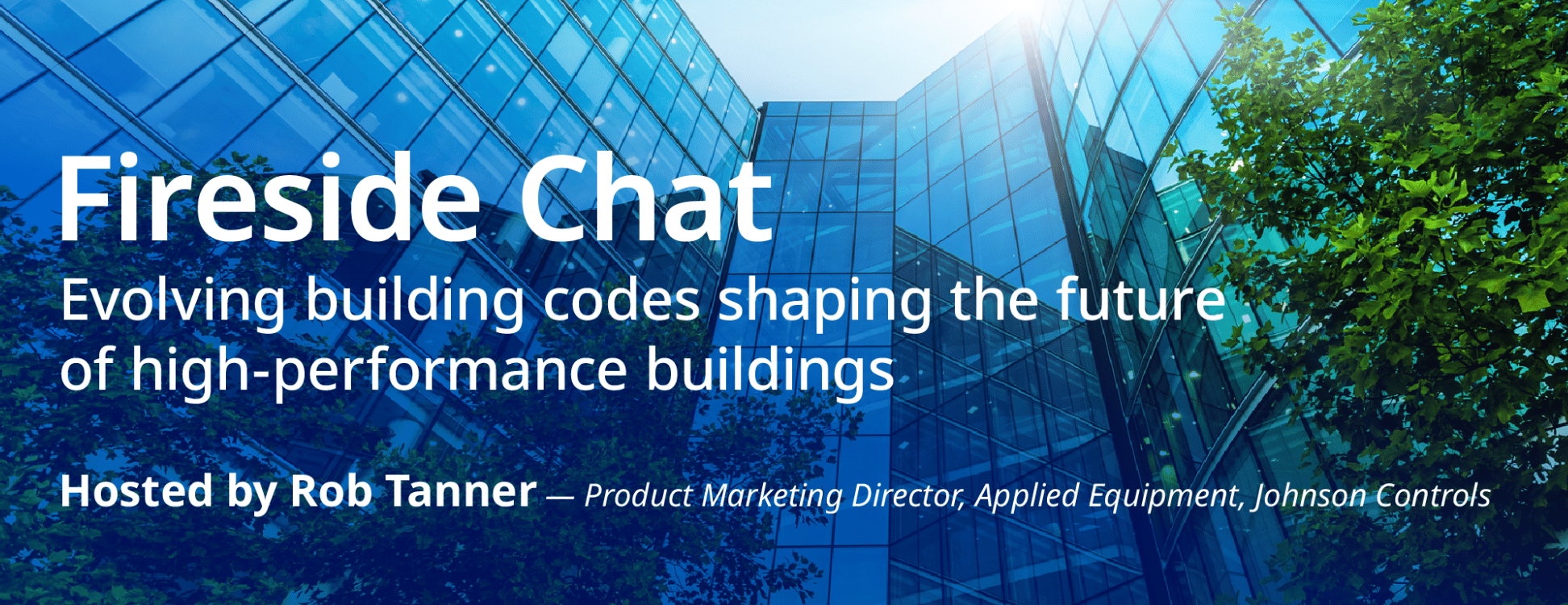
Do you have a high-performance building strategy? Do you know why you need one?
Building codes are evolving fast. Decarbonization, electrification, air quality, resilience — the standards are getting more rigorous. And they no longer only apply to construction.
They follow your building into operations. Which means if you're responsible for how a building runs, this is on your plate now, too.
Johnson Controls has been on Supercool. We're big fans. This month, they're launching a new webinar series on building performance standards. We're excited to partner with them to bring it to you.
The first session is on March 19th, 12 to 1 pm CT.
Host: Rob Tanner, Director at Johnson Controls, who has spent two decades reimagining the performance of buildings to serve people, places, and the planet.
Guest: Josh Brackett from Banner Health, where he leads compliance across operations, design, and construction for all healthcare facilities.
↓
Interested in Advertising with Supercool?
Connect with future-forward decision-makers seeking next-gen climate innovations. Reach out to discuss how Supercool’s platform can help. Just hit reply to this email.
↓
Not yet subscribed to Supercool?
Click the button below for weekly updates on real-world climate solutions that cut carbon, boost the bottom line, and improve modern life.
🌐
1