- Supercool
- Posts
- 🌐 Beauty and Brains: Lunar Batteries Save Money and Look Good Doing It
🌐 Beauty and Brains: Lunar Batteries Save Money and Look Good Doing It

Josh Dorfman
February 05, 2026
I never realized how much I loved design until I woke up one morning in 2007 surrounded by some of the most beautiful modern furniture I'd ever seen.
My bed was made by Christopher Douglas, whose Material Furniture collection was honored in Time’s Style & Design 100. My couch was made by Robert Craymer, whose sofas were in the homes of many Hollywood A-listers. My dining table and chairs from Team7 were finely sculpted.

Team7 furniture
Everything was made of eco-friendly materials—natural latex cushions, organic cotton fabrics, sustainably harvested woods. This was my Vivavi furniture showroom, a company I started in 2004. Having invested every dollar I had into the business with none left over for rent, I was living in it.
To me, design was strategy. A lever. A hook to entice unsuspecting everyday Americans to become environmentally friendly consumers.
It worked then. It's increasingly working now.
That's the thing about the clean energy transition—it's increasingly beautiful.
Beauty is no longer the domain of stunning EVs from Rivian or Tesla—Cybertruck excluded. Today, it shows up in leading-edge products that are electrifying our homes.
What Lunar is doing for battery storage is a case in point. Its batteries are stacked vertically on the side of a house and make a striking design statement. With Lunar, turning your home into a mini power plant isn't just impressive; it’s sleek.
It's the kind of design-first approach that takes a product from early adopters excited about tech to mainstream customers excited to show it off to their envious neighbors.

Lunar batteries on the exterior of a home.
The Two-Year Bet
Kunal Girotra served as Head of Tesla Energy before leaving to found Lunar in 2020. Then he went silent for two years.
He assembled a 250-person team, raised $300 million, and built the hardware and AI software—all in stealth. When Lunar launched publicly in 2022, it didn't announce a technology roadmap. Instead, it brought a state-of-the-art product to market.
The vision: Intelligent Batteries turn homes into mini power plants that save money, provide backup power, sell power back to the grid, and collectively reduce dependence on fossil fuels.
"Google and Apple claim that they have the home covered," Kunal told me. "If you look at those systems, all you can do is control Wi-Fi lights."
Entertainment systems and voice assistants shouldn't run your home. Energy production and storage should.
"This is the first time that energy can be stored and controlled in one app and one system," Kunal said. "We believe that the power plant is the central nervous system of the energy flow in a home."
Design Meets Ecosystem
Lunar is emerging as the first battery storage company to act like a consumer product company.
The Sahara curve is inspired by desert light and shadow
The blue finish shifts with sunlight
Its IP68 flood-proof rating means batteries are submersible to a meter during flooding while still operating
Vertical stacking saves space
Hardware and software are designed together, like an iPhone
"It's very easy or boring to stack a bunch of batteries and put an ugly cover on it," Kunal said. "Steve Jobs led the way and showed us that design and how things look matter."
Beauty is one key element. Kunal delayed the launch to build a fully integrated ecosystem: solar, storage, and load control.
"We could have launched sooner and just shipped a battery with an inverter or added systems later, as most companies have been doing," Kunal said. "We said no."
The industry is plagued by single-product companies. One makes an inverter, another makes batteries, a third makes smart panels, and a fourth makes chargers.
"Consumers are fed up with five different apps. Installers are fed up with five different systems that don't talk to each other—and one firmware update messes up the other system," Kunal said.
Lunar launched with one app that monitors solar production and controls when to charge the battery, power the home, or export to the grid.
Its Brain Creates 300 Plans Every Morning
Lunar’s AI software learns each home's unique energy fingerprint in two weeks. Each morning, it generates 300 potential operational plans, selects the best one, and updates it every 30 minutes based on actual performance.
The software considers three sources of variability:
Hourly changes in utility rates
Unique household behavior that also shifts with seasons
Weather patterns affecting solar generation
The goal: achieve the lowest cost energy for the homeowner.
Utility rate structures have gotten absurdly complex. Bay Area import rates—what you pay for grid power—range from 25 cents to 60 cents per kilowatt-hour. Export rates—what utilities pay you for sending power back—hit zero most of the time.
But during peak summer stress, export rates jump to 70 cents, 80 cents, or a dollar.
Conventional battery systems are dumb. They charge during the day and discharge at night.
Lunar's AI knows the export schedule. It charges the battery during the cheapest daytime hours. When you're consuming energy and import prices are low, you use cheap grid power and save on battery charge. Then it exports stored energy at premium evening rates.
"That real-time arbitrage, it can do because it's learning, it's thinking, it knows what's going to happen," Kunal said.
Lunar's optimization saves customers $338 annually—more than conventional solar-plus-battery systems deliver. Add $464 from Virtual Power Plant participation, and homeowners earn over $800 in total, with the peace of mind that comes from knowing they have backup power during outages.
From Homes to Virtual Power Plants
Home-level optimization fits into a larger strategy. Kunal is building virtual power plants by aggregating thousands of optimized homes.
Lunar's GridShare software manages 650 megawatts of distributed energy—Lunar batteries, competitor batteries, and EVs across multiple continents. Utilities and energy retailers use it to orchestrate distributed resources.
"A utility, all they have to do is press a button and say, I need 50 megawatts, I need 100 megawatts," Kunal said. "Lunar, you do that work downstream."
Three California community choice aggregators use the platform. So do energy retailers in Texas and utilities like ConEd on the East Coast.
Here's where precision matters:
Imagine 10,000 homes, each with a 20-kilowatt-hour battery.
That's 100 megawatts of theoretical capacity.
But not every battery is fully charged.
Some homes are at 10 kilowatt-hours, others at 2.
Most aggregation software plays it safe, assuming each home can only deliver 5 kilowatt-hours. So 10,000 homes deliver just 50 megawatts—half the available capacity.
"In some systems, you could get only 50 megawatts out of 10,000 homes because they play conservative," Kunal said. "Whereas our system tries to maximize the power and energy for that home because we have that per-home knowledge."
Lunar's software knows each home's actual state of charge, consumption patterns, and next-day forecast. Which means it can confidently deliver double the power from the same set of homes.
For homeowners, that precision means higher VPP earnings. For utilities, it means reliable capacity when demand spikes. For the grid, this means that distributed energy replaces fossil-fuel peaker plants, which produce the dirtiest and most expensive on-demand power.
What's Next
Yesterday, Lunar announced $232 million in new funding—a $102 million Series D led by B Capital and Prelude Ventures, plus a previously unannounced $130 million Series C led by Activate Capital.
The funds will expand Lunar's work with utilities and scale battery systems nationwide. Kunal is targeting 3X volume growth in 2026.
"2026 is the year of execution and focus," he said.
Supercool Takeaway
Lunar proves that distributed energy scales fastest when companies design for customer adoption first—beautiful hardware, integrated ecosystems, economic value—then aggregate into virtual power plants that replace centralized fossil-fuel generation.
Operator Takeaways
Build the vision into every layer. Lunar's design, software, and GridShare all serve the same goal: turn homes into mini power plants that replace fossil-fuel generation. Vision alignment creates coherence.
Make the sustainability metric the business metric. When homeowner economics and grid decarbonization align, adoption accelerates. Lunar delivers $800+ annual savings while replacing peaker plant capacity.
Go dark to nail integration. Widget companies ship fast. Ecosystem companies delay launch to get it right. Lunar spent two years in stealth because fragmented systems don't scale—integrated ones do.
This Week’s Podcast Episode
Beauty and Brains: Lunar Batteries Save Money and Look Good Doing It
🎙️ Listen on Apple, Spotify, YouTube, and all other platforms.

↓
Stat of the Week: 295,000

The number of U.S. households that have installed grid-connected batteries, according to Environment America, as of November, 2025.
While the market is growing rapidly, the upside remains enormous: 295K homes represent just 0.04% of the total single-family U.S. housing market (82-85 million).
Quote of the Week:
There's a misnomer that brilliantly designed products are therefore expensive. That is what Lunar is trying to squash.
↓
Design is becoming a powerful strategy in climate tech adoption. Products gaining traction aren’t just more efficient or more sustainable—they’re intentional in how they upgrade daily life, whether that’s a range you want to cook on, a charger that disappears into the curb, or a heat pump that delivers extra comfort by responding to how you move between rooms.
Lunar fits into this shift, using industrial design to make energy storage feel considered, human, and ready for the home, rather than treating it as infrastructure to be kept out of sight.
Across home electrification, mobility, and public infrastructure, a growing set of companies leverage design to upend the psychological and cultural cost of change:

Reimagines the mini-split heat pump as a deliberate interior object, treating HVAC as part of the living space rather than a necessary eyesore.
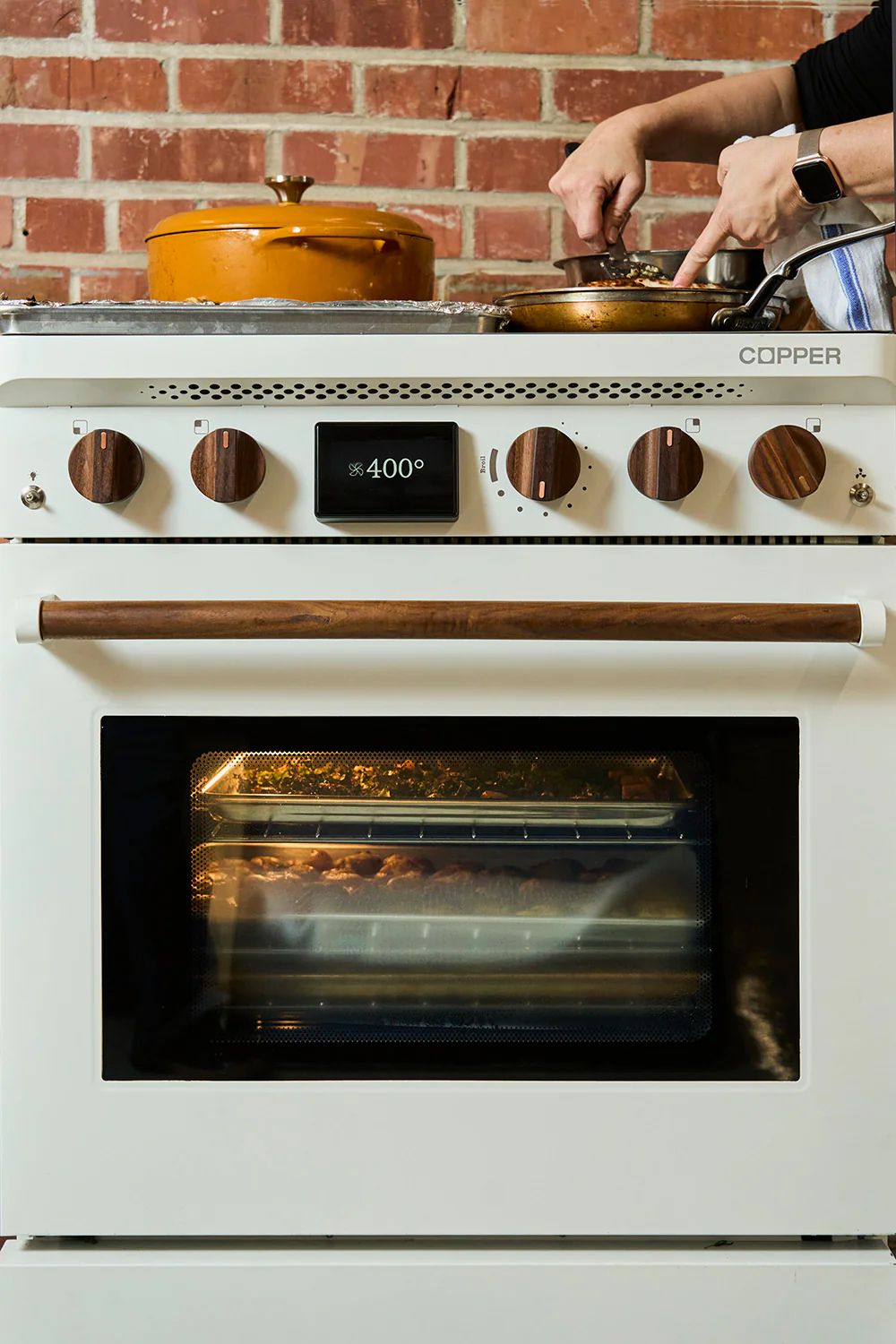
The Charlie induction range leads with beauty and cooking experience, reframing electrification as an upgrade rather than a compromise.

Designs shared micromobility vehicles around how people actually move—together, for short trips—bringing intention and durability to a category known for disposability.
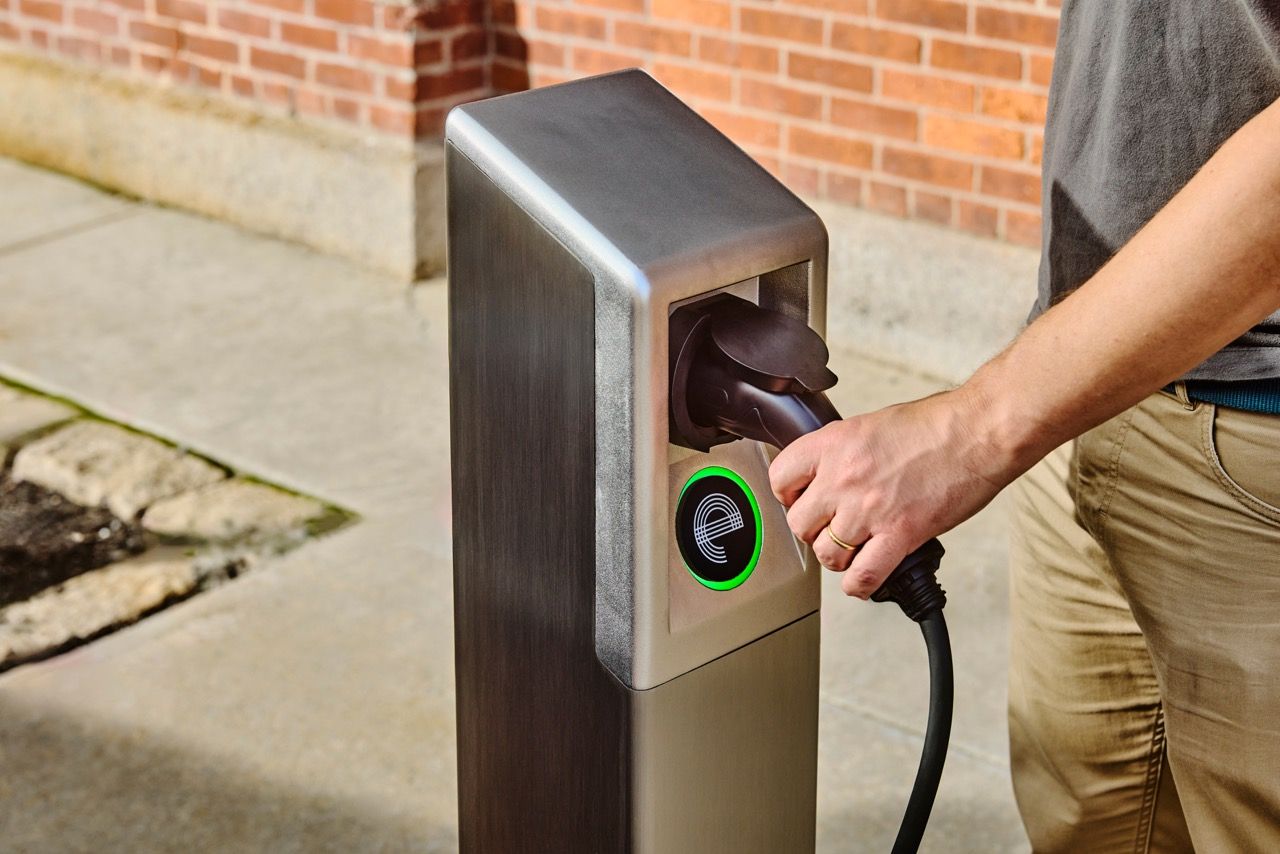
EV charging infrastructure designed to blend into the streetscape, reducing friction for cities and residents by making charging feel civic, calm, and unobtrusive.

Redesigns the window heat pump—one of the most disliked objects in housing—into something quiet, efficient, and visually acceptable, especially for renters.

Italian-designed electric motorcycles that pair striking form with extreme performance, proving electrification can be emotionally compelling and brutally fast.

Treats EV chargers as consumer hardware, not utility afterthoughts, with products designed to belong in garages, parking structures, and public space.
↓
PODCASTS
The Kind Leader: Leading with Optimism — Josh Dorfman on Making Climate Solutions Human, Scalable & Enduring
The Curious Captalist: Josh Dorfman (Supercool)
↓
Interested in Advertising with Supercool?
Connect with future-forward decision-makers seeking next-gen climate innovations. Reach out to discuss how Supercool’s platform can help. Just hit reply to this email.
↓
Not yet subscribed to Supercool?
Click the button below for weekly updates on real-world climate solutions that cut carbon, boost the bottom line, and improve modern life.
🌐